

If It Looks Like a Scam, It Is!
How to Spot a Fake Marketing Email
Pretty much every person with a public business email knows the frustration. You open your inbox and there’s another one. An email from someone who “found your website on Google” and is very concerned about your rankings. They have an SEO audit ready to send and they can get you to page one! They just need you to respond and of course, eventually, get your money.
These emails are ubiquitous and constant, and while some are easy to spot right away, some might just give you a gut feeling that something is off, and it can be hard to articulate exactly why. Here is a closer look at the red flags that separate a legitimate marketing outreach from a scam, and how to spot them before you waste a single minute engaging.
The Email That Inspired This Blog
A client recently forwarded us an email they received from a company pitching SEO services. We are going to walk through it piece by piece, because it is such a wonderfully instructive example.
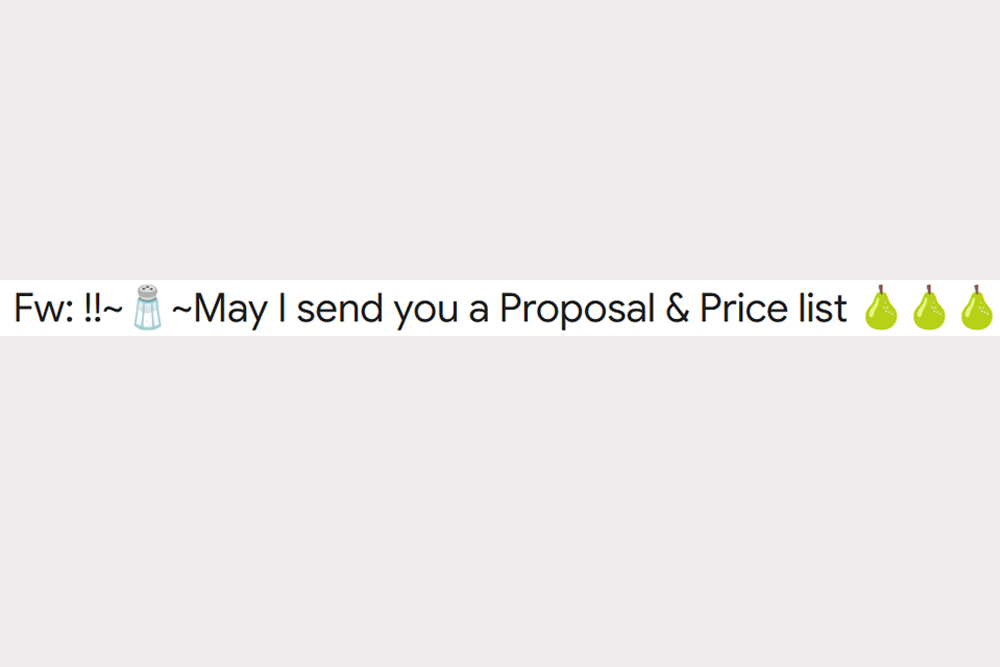
Let’s start with the subject line. It arrived with multiple emojis. Not one or two, and not ones used thoughtfully, but a string of nonsensical fruits clearly designed to grab attention in an inbox.
An excerpt reads: “I found your details on Google and I have looked at your website. it’s not ranking on Google and other major search engines. We can place your website on Google’s 1st page (Yahoo, Facebook, etc.) If you were on page #1, you’d get so many new customers every day. May I send you a Proposal & Price list!!!!!!”
That short little message has a lot to unpack, so let’s get to it.
The Generic “I Found You on Google” Opening
A legitimate marketing agency doesn’t cold email strangers with vague claims about finding their website on Google. The opening line “I found your details on Google” is a template. It gets sent to thousands of businesses at once, with nothing changed except possibly the recipient’s name. Sometimes they don’t even do that. We can’t tell you how often we get emails addressed to someone else entirely!
A real agency that has a valid reason for reaching out and has genuinely reviewed your website would have something specific to say. They might reference an actual page, an actual issue, or something concrete to say about your business. A vague opening intro that could apply to anyone is the first signal that you are dealing with a mass spam email campaign, not a genuine outreach.
Claims That Can’t Be Verified or Guaranteed
“We can place your website on Google’s 1st page.”
No one can guarantee this. Not even a little bit. Google’s search algorithm involves hundreds of factors and changes constantly, and in truth can be a little cryptic. Any company that promises a specific ranking position as a certainty is either lying or doesn’t understand how SEO actually works. Possibly both, and in neither case someone you want to work with.
Legitimate SEO professionals talk about improving visibility, building authority and trust over time, and targeting the right keywords for your audience. They do not promise page one placement the way a used car salesman promises you’ll love your fancy new ride.
Yahoo and Facebook Categorized as Search Engines
This one is subtle but telling. The email references “Google’s 1st page (Yahoo, Facebook, etc.)” as if these are comparable search platforms that make sense mentioning as equivalent.
Yahoo’s share of the search market is negligible. Facebook is not a search engine. Any professional with genuine SEO expertise would know this. Heck, most lay people know this. Lumping them together signals either a fundamental misunderstanding of the industry or a deliberate attempt to sound more impressive by inflating the scope of what they are offering you. Neither is a good sign.
Excessive Punctuation and Emoji
Count the exclamation points in that email! There are at seven across a few sentences, not to mention the two in the subject line. Add in the emojis splattered across the subject line and you have a message that reads less like a professional business proposal and more like a late-night infomercial or a teenager’s text thread.
Legitimate agencies communicate professionally. They use punctuation normally and they don’t need to shout at you with exclamation points or use emojis to get your attention. Excessive punctuation and emoji are true hallmarks of spam because they are designed to trigger an emotional response rather than convey credible information.
A Suspicious Sender
Look closely at where the email came from and who the sender is. Scam emails quite often arrive from addresses that don’t match the name of the company supposedly emailing you. They sometimes use free email services like Gmail or Yahoo, or contain strings of random numbers and letters alongside a business name.
A legitimate marketing agency should send emails from their own domain. If someone is pitching you SEO services from a Gmail address, that tells you a lot about how seriously they take their own digital presence.
Urgent and Pressuring Language
Most scam marketing emails try to create a sense of urgency.
“Your rankings are suffering right now! Your competitors are getting ahead of you! Act fast before this offer expires!”
This kind of language is designed to bypass skepticism and push you toward a quick decision before you have time to think clearly about it.
A real agency that values customer relationships understands that choosing a marketing partner should be a thoughtful decision. They don’t pressure you, they give you information and let you decide what’s best for your business on your timeline.
Poor Grammar, Capitalization, and Spelling
Let’s look again at the content from the example email and notice the inconsistent capitalization:
“With Your Permission I Would Like to Send Audit Report Of Your Website?“
Random capitalization in the middle of a sentence, missing words, and awkward phrasing are all signs that the email is hastily written, poorly translated from another language, or created by someone who put very little effort into it.
A company that can’t be bothered to even proofread their sales email is most certainly not going to bring careful attention to your marketing.
What Should Legitimate Outreach Look Like?
For contrast, here is what genuine professional outreach should look like. It should come from a real domain that matches the company name. It should reference something specific about your business that shows they actually researched it. It doesn’t make guarantees but explains an understandable and realistic approach. It should be clearly written and should not have excessive punctuation or pressuring language. And finally, it should give you a clear, low-stakes next step like a conversation or a free consultation rather than demanding an immediate decision.
The bar isn’t high, but most scam emails fail at this spectacularly, which is why learning to spot them is such a vital skill.
We’re Ready to Help, No Scam About it
If an email feels off or looks like a scam, it probably is! Search the company name along with the word “scam” or “reviews” and see what comes up. Look at their website. Check whether they have a real physical address, a real team, and real client work to show.
The best marketing partners are going to be easy to verify, and the fake or bad ones are counting on you not to bother with verifying.
At Wild Iris Marketing, we don’t cold pitch strangers with promises we can’t keep. If you want to know what honest SEO support and expectations looks like, we’d love to have a conversation on your terms and your timeline.