Want a Google Review?
How to Get One (and One Big No-No)
You know that Google reviews matter for your business, but do you have a strategy for getting them consistently? And even more importantly, do you know that Google has rules you need to follow while trying to collect them? One of the means that many businesses use to encourage customers to leave a review can land you in hot water.
This blog covers why reviews matter even more than most business owners think, how to ask for them confidently and correctly, and one specific tactical mistake for encouraging reviews that is becoming increasingly risky to make.
Reviews Matter More Than You Probably Think
Online reviews are one of the more powerful trust signals a business can ask for, and the influence they carry goes well beyond what you might think.
When a potential customer finds your business through a Google search, the reviews that customers have left are one of the first things that they’ll look at to decide whether they want to work with you. A collection of honest and detailed reviews tells them that other real people have worked with you and found it worth taking the time to say “good job.” This matters, especially for service businesses where customers are making decisions based on trust rather than a product they can physically look at before they buy it.
Reviews are also great for SEO. They directly affect local search visibility. Google’s search algorithm takes the number, recentness and quality of your reviews into account when deciding which businesses to put higher in local results. A business with a robust and regularly updated review profile is more likely to show up when someone nearby is searching for what you offer. Basically, more genuine reviews means more visibility, and more visibility means more customers finding you before they find your competition.
Beyond search, reviews provide something that no amount of marketing can create, and that is third-party validation. You and your marketing efforts can say your business is the best all day long on your own website. But when a stranger says it on Google, people will believe it far more than they will for something that is clearly self-promoted.
Google isn’t Always the Only Game in Town
Google is easily the most important review platform for most businesses, but it is not the only one worth paying attention to.
Yelp remains influential for restaurants, home services, and some retail stores. Facebook reviews can carry a lot of weight for businesses whose customers are active on the platform and who find businesses through their social feeds. For businesses in specific industries there are platforms which can be equally or maybe even more important than Google, depending on where your customers are looking. These include Houzz for home improvement, TripAdvisor for hospitality and tourism, and others for medical practices, legal services and other niche industries.
The general principle is the same across all of them though. Genuine, detailed reviews from real customers build trust, improve visibility, and give potential customers the confidence to reach out to you.
Just Ask!
The most effective way most businesses can get new reviews is also the simplest. Just ask for one!
Dissatisfied customers love to drop a negative review, but most satisfied customers don’t leave one on their own. Not because they don’t want to help, but because it just doesn’t occur to them. A simple, direct request at the right moment changes that. After a job is completed, after a customer expresses satisfaction, or really after any positive interaction is the perfect moment to say “We’d really appreciate it if you’d leave us a Google review. It makes a big difference for us.”
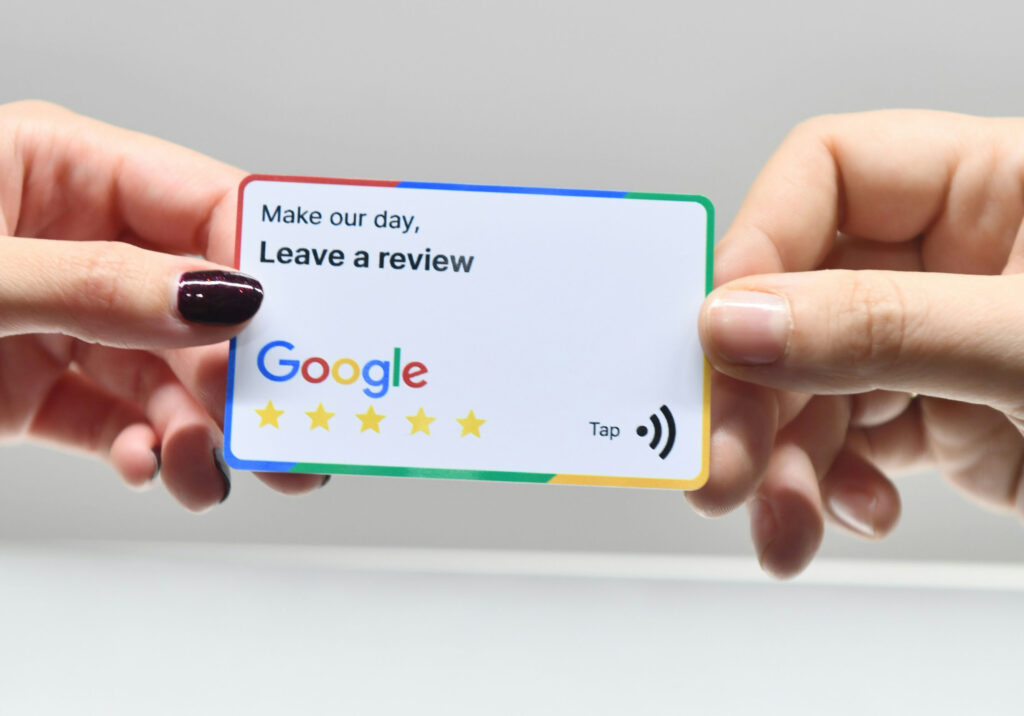
Make it easy. Send a direct link to your Google review page in a follow-up email or text. Add a QR code to your receipts, invoices, or signage. The fewer steps between “I’d like to leave a review” and the review actually being submitted, the more reviews you will get.
The ask doesn’t need to be awkward. Most people are genuinely happy to help a business they’ve had a good experience with. You just need to give them a nudge and an easy way to do it.
The One Thing NOT to Do
Here is where a lot of businesses get into trouble, often with good intentions.
Offering something in exchange for a review, whether it be a discount, a freebie, a sweepstakes entry, loyalty points, or anything else of value, is in direct violation of Google’s review policies! It doesn’t matter whether the incentive is specific to a positive review or whether you just ask for honest feedback…any compensation in exchange for a review is strictly prohibited.
The consequences of getting caught doing this are real. Google can remove all those incentivized reviews, penalize your Business Profile, and in serious cases even suspend your listing entirely. Losing a profile you have spent years building is a big blow and can be very difficult to recover from.
Recently, Google has even started to actively ask customers who are leaving reviews whether the business offered them any kind of incentive to do so. This means the risk of being caught has increased substantially and is no longer just a question of whether Google has noticed unusual review patterns. Your own satisfied customers may inadvertently report this prohibited practice by simply answering an honest question.
Beyond just Google’s policies, the Federal Trade Commission has its own set of rules about disclosure and transparency in reviews businesses get. Incentivized reviews that are not clearly disclosed can create legal problems that go well beyond a penalty from Google.
The good news is that you don’t really need incentives. Genuine reviews from real customers carry far more weight than a flood of reviews that were essentially purchased. A smaller number of honest, detailed reviews will always outperform a bunch of single-sentence, incentivized reviews, both in how they’re seen by potential customers, and in how Google values them.
Respond to Reviews
One final thing you should do: respond to your existing reviews!
Responding to positive reviews shows customers that you are attentive and appreciate their feedback. Responding to negative reviews calmly, professionally, and without defensiveness shows that you take customer concerns seriously and will handle them with real thoughtfulness. Both behaviors signal to Google and to anyone reading your profile that your business is active, engaged with customers, and worthy of their trust.
You don’t need to write a novel in response to every review. A genuine, brief thank you or acknowledgment goes a long way.
Hey, Thanks for a Great Job!
Reviews are one of the most valuable things a customer can give your business, and many will be willing to give one if you simply ask. Get in the habit of asking after a sale or positive experience, make it easy with a QR code or by giving a link, and never offer something in exchange for the review.
At Wild Iris Marketing, we help businesses build and manage their Google Business Profiles as part of a broad local search strategy. If your review profile needs attention or you want to put a smarter system in place for collecting them, we’re here to help!