Many business owners think about their website in the same way that they think about the sign hanging above their store’s front door. It has your business name on it, you hang it up, it looks good, and it sits there doing its job. You don’t think about it much until something goes wrong.
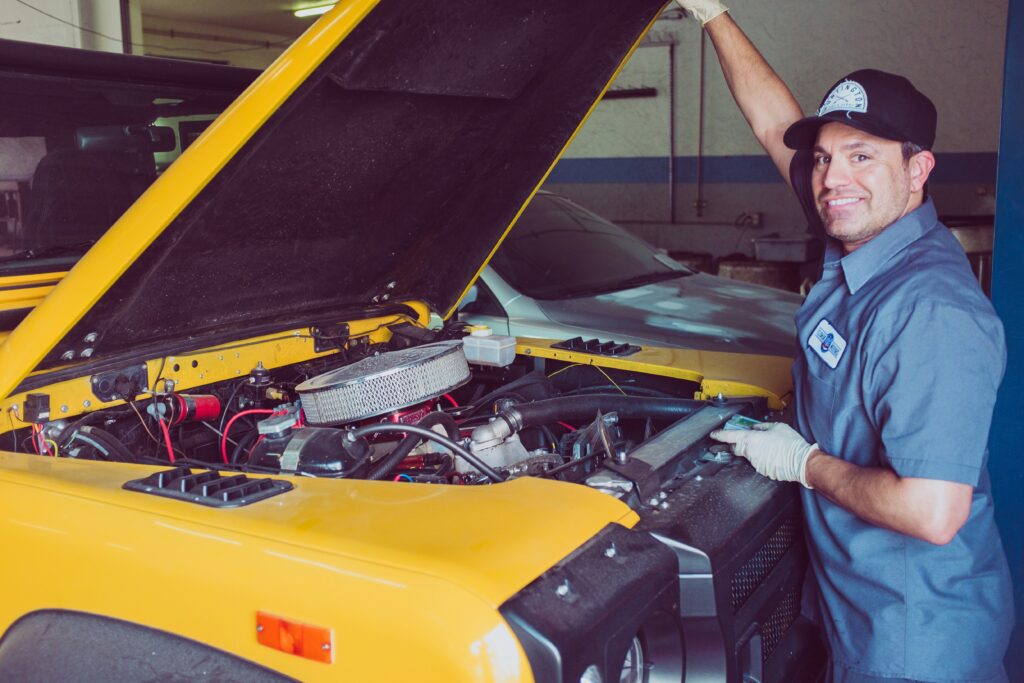
But websites are nothing like a sign. They’re more like a vehicle. They need regular attention and maintenance to keep running well, be safe to drive, and not break down at the worst possible time.
It’s a terrible idea to drive a car for three years without changing the oil, rotating the tires, or checking the brakes. You know that skipping vehicle maintenance doesn’t make problems go away, it just makes them more expensive when they finally catch up with you. Your website is exactly the same, and the consequences of neglecting it are just as real and possibly far more expensive.
What Does “Website Maintenance” Mean?
When most people hear “website maintenance,” they picture updating the hours on their contact page, changing some images, and maybe updating prices on services. Those are all part of it. But the maintenance that keeps things running smoothly happens under the hood.
Most business websites run on a content management system (CMS) like WordPress, which powers close to half of all websites on the internet. WordPress itself is relatively secure, with a large team of developers who keep an eye on it and update it regularly. But vulnerabilities don’t usually come from WordPress itself. They come from the plugins and themes that enhance its features and possibilities, and those require consistent attention and updating.
Plugins are small software packages that add functionality to a website, like contact forms, booking systems, image galleries, SEO tools, payment processing, and numerous other things you probably have in some form or other on your website. Each of these plugins is created by a developer separate from WordPress, and each needs to be updated when security patches or improvements are released. If those updates don’t happen, the outdated plugin might cease working, might make your website cease working, or even become an open door to hackers who can cause endless problems for your business.
According to Patchstack, a WordPress security research organization, over 11,000 vulnerabilities were discovered in the WordPress ecosystem in 2025, with over 90% of them found in plugins rather than the WordPress platform itself. Their research also found that the average time from when a vulnerability is found to when attackers begin attacking it is just a few short hours. Automated bots constantly scan the internet looking for sites that haven’t updated their software. Your site does not need to be specifically targeted for having outdated plugins in the backend, it just needs to be found by the scanning bots to get hacked.
What Happens When a Site Gets Hacked?
A hacked website doesn’t generally show a dramatic “hacked” screen or get announced to its owner with threatening emails. The damage being caused is usually hidden for a time. Malware gets installed into the pages of your site that then redirects your visitors to other nefarious sites, or spam links get buried in your content to increase search rankings for someone else, or even worse, your customers’ data gets harvested. The site can keep functioning in a seemingly normal way while all of this is happening, and the business owner might have no idea for weeks or even months.
By the time it’s discovered, cleaning it up is expensive, time-consuming, and sometimes incomplete. If Google has already flagged the site as dangerous, it will tank your search visibility, and customers who have encountered the compromised version of your site have lost trust in your business that will be very hard to get back.
Going back to car maintenance, this is your engine locking up because you never changed the oil. Everything seemed fine right up until it was catastrophic and necessitated an engine rebuild.
Content and Performance Need Maintenance Too!
Security is definitely the most urgent reason to maintain your website, but it’s obviously not the only one.
Search engine algorithms favor websites that are actively maintained. Fresh content, updated information, and a site that loads quickly all signal to Google that your website is a useful and relevant resource rather than an abandoned or useless one. A site that hasn’t been touched in two years is likely to have outdated service descriptions, old business information, broken links, and misleading content, which all send the wrong signal.
Page speed also quietly slows over time. Images that weren’t optimized when they were uploaded to your site, plugins that have become overwhelmed or antiquated, and hosting environments that haven’t been updated all add up to a slower site. Slower sites rank lower and lose visitors because of this.
The More Technical Stuff
For those who want to know what specific technical stuff needs attention, here is a simple language version of the regular tasks that keep a website healthy:
Updates to plugins and themes should be applied as soon as possible, ideally within days of release for security patches. WordPress core updates follow the same recommendations. Backups should be automatic and regular and stored somewhere safe, away from the site itself. That way, if something does go wrong, recovery can be managed in hours rather than weeks. SSL certificates should be renewed before they expire, or visitors will see a browser warning that tells them your site is not secure. Most of us have seen a site with this warning, and it’s a real turnoff to potential customers. Links should be checked periodically and fixed if broken, because they frustrate visitors and they show neglect to search engines. And for sites running older PHP versions (the language WordPress runs on), updating to current supported versions matters for both performance and security.
None of this requires the business owner to have a deep understanding of the backend. It does require someone to be paying attention to it on a regular basis, and this is the kind of thing we do at Wild Iris Marketing.
The Potential Cost of Doing Nothing
Getting your website fixed on an emergency basis costs significantly more than routine maintenance. A hacked site can cost hundreds or even thousands of dollars to fix and clean up, and that’s before you account for SEO damage, lost customer trust, and revenue that went to someone else while the site was compromised or down.
Routine maintenance handled by professionals like Wild Iris Marketing costs a fraction of that. It’s not complicated math. It’s the same simple math that tells you a $75 oil change is cheaper than a $4,000 engine repair or rebuild.
Let Us Peek Under Your Hood
Your website is not an investment you can set and forget. It’s built of software running in a constantly changing environment with potential breakdowns and new threats emerging daily. And customers will leave quickly if it’s slow, broken, or compromised.
At Wild Iris Marketing, website maintenance is part of how we take care of our clients’ digital presence. If your site hasn’t had a proper checkup in a while, or you’re not sure if anyone is even keeping an eye on it, we’re happy to look under the hood and make sure it’s all running smoothly.